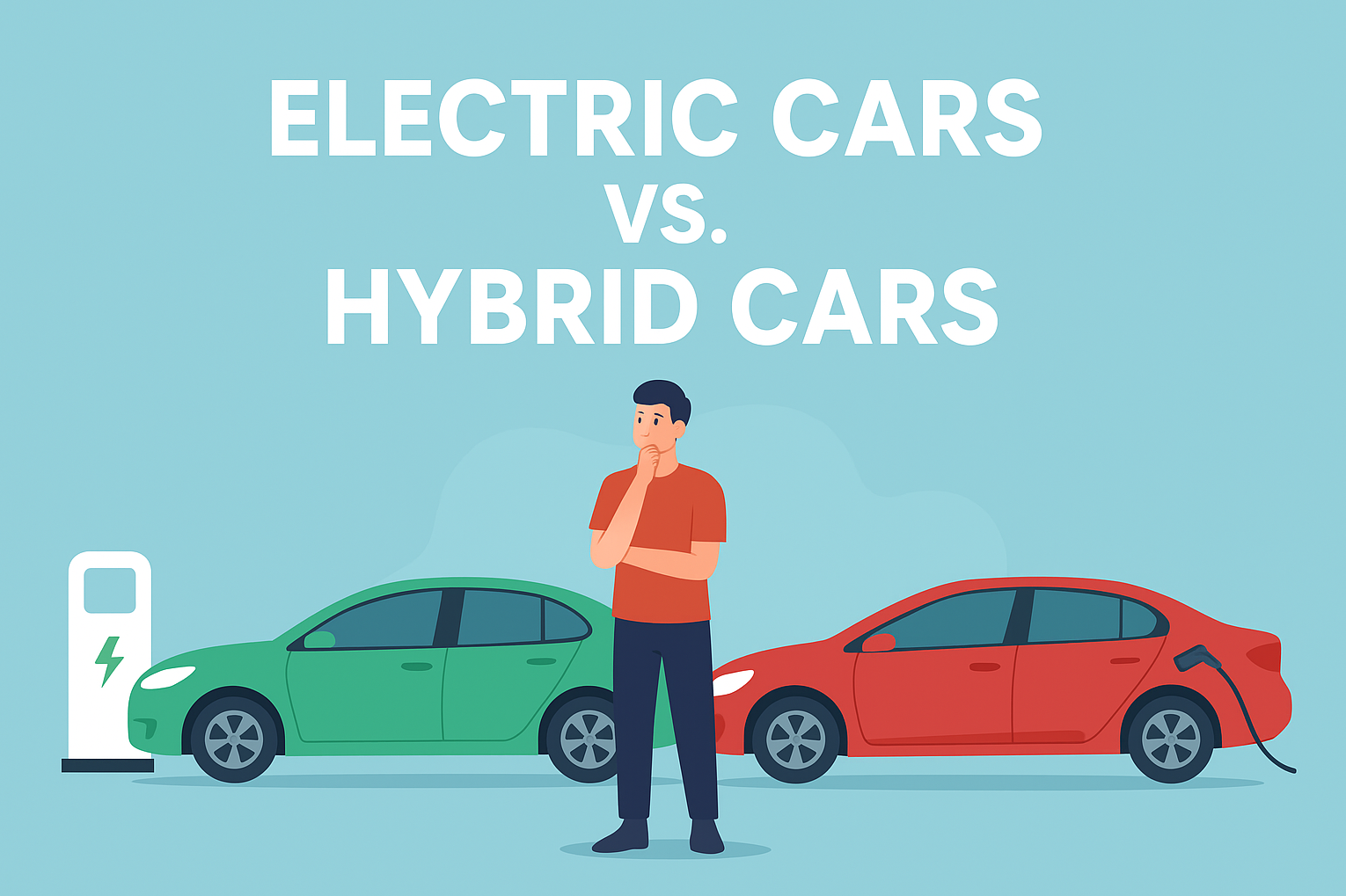
Electric Cars vs. Hybrid Cars: Which One Is Right for You?
The world of transportation is changing rapidly as governments, automakers, and consumers aim for cleaner, more energy-efficient solutions. As fuel prices rise and environmental concerns increase, more people are considering switching from traditional gasoline vehicles to electric or hybrid cars. However, with different technologies available, it can be difficult to decide which type of vehicle is the best choice.
Electric cars (EVs) and hybrid cars both offer alternatives to gasoline-only engines, but they operate differently and suit different lifestyles. To help you choose the right option, this article provides a detailed comparison of the two, including their benefits, drawbacks, performance, cost, maintenance, driving range, and ideal users.
What Is an Electric Car (EV)?
An electric vehicle, commonly called an EV, runs entirely on electricity stored in a rechargeable battery. Instead of a gasoline engine, it uses an electric motor to power the wheels.
How EVs Work
- They plug into a charging station or wall outlet to recharge the battery.
- There is no tailpipe emissions system since they don’t burn fuel.
- Many EVs offer advanced driving features such as regenerative braking, smart displays, and autonomous technology.
Popular Examples
Tesla Model 3, Nissan Leaf, BMW i4, Hyundai Ioniq 6, BYD Seal, and Chevrolet Bolt.
What Is a Hybrid Car?
A hybrid vehicle uses both a gasoline engine and an electric motor, working together to deliver improved fuel efficiency.
How Hybrids Work
- The electric motor provides assistance during low-speed driving or acceleration.
- The gasoline engine takes over at higher speeds or when extra power is needed.
- The battery recharges automatically through engine power and regenerative braking—no plugging in required.
Popular Examples
Toyota Prius, Honda CR-V Hybrid, Toyota Camry Hybrid, Hyundai Sonata Hybrid.
Electric Cars vs. Hybrid Cars: Key Differences
| Feature | Electric Cars (EVs) | Hybrid Cars |
|---|---|---|
| Power Source | 100% electric battery | Gasoline + electric |
| Charging | Requires plug-in charging | Self-charging while driving |
| Fuel Cost | Very low cost, electricity cheaper than gasoline | Lower fuel use, but still uses gasoline |
| Emissions | Zero emissions | Reduced emissions, not zero |
| Range | Depends on battery size | Longer range due to dual systems |
| Maintenance | Lower maintenance | Moderate maintenance |
| Purchase Cost | Typically higher upfront | Mid-range pricing |
| Best For | City driving, eco-friendly users, short to medium trips | Long-distance drivers, limited charging access |
Advantages of Electric Cars
1. Zero Emissions and Environmentally Friendly
Electric vehicles produce no tailpipe pollution, which helps reduce carbon emissions and improve air quality. They are a key solution for climate change and future transportation sustainability.
2. Lower Operating Costs
Charging an EV is often cheaper than filling a gasoline tank, especially when charged at home. EVs also have fewer moving parts, which reduces repair expenses.
3. Quiet and Smooth Driving
Electric motors provide instant torque, giving EVs quick acceleration and a smooth driving experience with very little noise.
4. Government Incentives
Many countries offer tax rebates, reduced registration fees, and priority parking for EV owners.
5. Future-Ready Technology
EVs often come with advanced technology features, such as:
- Smart infotainment
- Fast charging support
- Battery management systems
- Autonomous driving assistance
Disadvantages of Electric Cars
1. Limited Driving Range
Although improving each year, some EVs still have a shorter range compared to fuel-powered cars, especially in cold weather.
2. Charging Time
Even with fast charging, it can take 20–60 minutes to recharge an EV battery — longer than a gasoline refill.
3. Charging Infrastructure Availability
Not all regions have enough charging stations, which can cause difficulties during long-distance travel.
4. Higher Upfront Cost
EVs can be more expensive at purchase due to battery cost, although prices are steadily decreasing.
Advantages of Hybrid Cars
1. Excellent Fuel Economy
Hybrids use electric power at slow speeds and gasoline power on highways, greatly reducing fuel consumption.
2. No Need to Plug In
The battery charges itself while driving, making hybrids convenient for users without access to charging stations.
3. Longer Driving Range
Since hybrids use gasoline and electricity, they can travel long distances without needing to stop frequently.
4. Lower Emissions Compared to Gasoline Cars
Although not fully carbon-free, hybrids release significantly less pollution.
5. Affordable Option for Beginners
Hybrids generally cost less than full electric cars, making them a popular first step toward eco-friendly driving.
Disadvantages of Hybrid Cars
1. Still Uses Gasoline
Hybrids are not fully environmentally clean. They still rely on fossil fuels and produce emissions.
2. More Complex Mechanically
Because hybrids combine two types of engines, they can be more expensive to repair if something goes wrong.
3. Less Electric-Only Driving
Many hybrids have limited ability to run only on electric power, usually only for short distances.
4. Battery Replacement Can Be Costly
Although long-lasting, hybrid batteries can be expensive to replace.
Which One Is More Affordable?
Upfront Price
- EVs usually cost more to purchase because of the battery.
- Hybrids cost less and are widely available in many price ranges.
Long-Term Savings
- EVs can save thousands of dollars annually on fuel and maintenance.
- Hybrids save money too, but less compared to EVs.
Charging vs. Refueling Convenience
If you live in a city with plenty of charging stations, an EV is convenient. You can plug in at home and recharge overnight.
If you travel long distances or live in a rural area with limited charging infrastructure, a hybrid may be more practical.
Performance and Driving Experience
EVs provide:
- Faster acceleration
- Instant torque
- Quiet and vibration-free driving
Hybrids offer:
- Smooth transition between power systems
- Good performance and efficiency
- Ideal balance for mixed driving environments
Which One Is Best for You?
Choose an Electric Car (EV) if:
✔ You want zero emissions
✔ You mainly drive short to medium distances
✔ You have access to home or public charging
✔ You want the newest technology and low running costs
✔ You live in a city with EV incentives and infrastructure
Choose a Hybrid Car if:
✔ You travel long distances often
✔ You don’t have access to charging stations
✔ You want better fuel economy without changing lifestyle
✔ You want a more affordable eco-friendly option
Conclusion
Both electric and hybrid cars represent major improvements over traditional gasoline vehicles, but the right choice depends on your needs, driving habits, and budget.
If you want zero emissions, low operating costs, and access to charging, an electric car may be the perfect match. However, if you need flexibility, travel long distances, or lack charging access, a hybrid car provides an efficient and practical solution.
As technology advances and clean energy expands, both EVs and hybrids will continue to grow in popularity, driving the future of transportation. Whether you choose electric or hybrid, you’ll be contributing to a cleaner and more sustainable world.