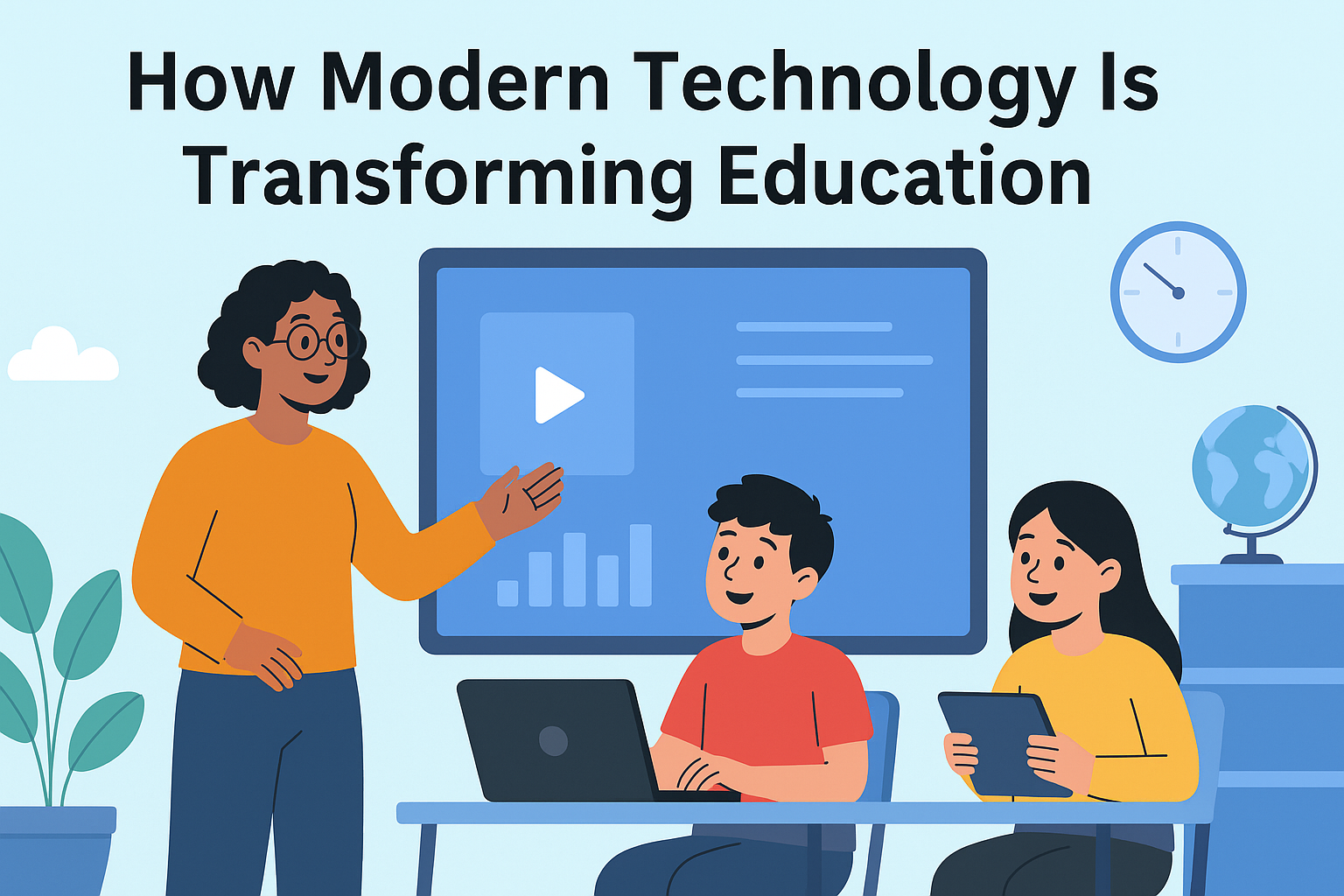
How Modern Technology Is Transforming Education: Benefits and Challenges
Education has always been one of the most powerful tools for shaping the future, and in today’s world, technology is changing the way students learn more rapidly than ever before. From smart classrooms and digital textbooks to artificial intelligence and online learning platforms, modern technology is transforming how education is delivered, accessed, and experienced. This shift has created exciting opportunities as well as new challenges for students, teachers, and schools around the world. Understanding these changes is essential as technology becomes a central part of everyday learning.
The Evolution of Technology in Education
Before the digital age, education mainly took place in physical classrooms using chalkboards, printed textbooks, and handwritten assignments. While these traditional methods are still valuable, the introduction of computers, the internet, and mobile devices has transformed the classroom environment. Students today can interact with multimedia content, access online research resources instantly, and collaborate with classmates from anywhere. The global shift accelerated even more during the COVID-19 pandemic, when millions of schools adopted online learning systems to continue teaching remotely. Since then, technology has become a permanent and essential part of education.
Key Ways Technology Is Transforming Education
1. Online Learning and Virtual Classrooms
One of the biggest changes in modern education is the rise of online learning platforms. Tools like Google Classroom, Zoom, Microsoft Teams, and learning management systems (LMS) allow students to attend classes remotely, submit assignments online, and participate in discussions through video calls or chat forums. Virtual classrooms break the barrier of location, allowing students to learn from anywhere—at home, in libraries, or while traveling. This is especially helpful for students who live far from schools, have health issues, or need flexible learning schedules.
2. Personalized Learning Through Technology
Every student learns differently, and technology helps support individual needs more effectively than traditional one-size-fits-all teaching. Artificial Intelligence (AI) programs and adaptive learning software can analyze a student’s progress and recommend customized lessons. For example, if a student struggles with math problems, AI tools can provide extra practice and explain concepts step-by-step. Meanwhile, students who are more advanced can move ahead at their own pace instead of waiting for the rest of the class. This creates a more positive learning experience and reduces classroom stress.
3. Digital Tools for Collaboration and Creativity
Modern education is no longer limited to reading and writing. Tools such as Google Docs, online whiteboards, and shared project platforms encourage teamwork and creativity. Students can work together on group assignments in real time, even if they are not in the same room. Technology also expands opportunities for creative learning using video editing tools, graphic design software, and digital storytelling apps. These skills are valuable not only in school but also in future careers.
4. Access to Unlimited Learning Resources
In the past, students relied mainly on printed textbooks, which were often expensive and became outdated quickly. Today, the internet provides access to endless resources—research articles, e-books, educational videos, simulations, and online courses. Websites like Khan Academy, Coursera, YouTube EDU, and online libraries offer free learning materials for nearly every subject imaginable. This makes education more equitable by providing high-quality resources to students from different backgrounds.
5. Gamification and Interactive Learning
Gamification means using game-like features in learning, such as points, badges, and challenges, to motivate students. Educational apps and platforms make learning fun and engaging by turning lessons into interactive activities. Subjects that students once found boring, like math or science, become exciting when presented through virtual labs, 3D models, and educational games. Students are more likely to stay focused and enjoy learning when it feels like play rather than work.
6. Smart Classrooms and Digital Equipment
Modern classrooms are now equipped with smartboards, tablets, projectors, and digital displays. These tools help teachers present lessons visually and interactively. Instead of just reading from a textbook, students can watch videos, explore simulations, and practice skills using digital tools. Many schools also use storage platforms that allow teachers to save and share lesson materials quickly, making learning more organized and efficient.
Benefits of Technology in Education
Greater Engagement and Motivation
Interactive lessons capture students’ attention better than traditional lecture-based teaching. Multimedia content—such as animations and virtual experiences—helps explain complex ideas in ways that are easy to understand.
Improved Accessibility and Inclusivity
Technology supports students with disabilities through tools like speech-to-text software, screen readers, subtitles, and adjustable reading formats. Students who struggle in traditional classroom settings gain more equal opportunities to succeed.
Better Communication Between Teachers, Students, and Parents
Digital learning platforms provide faster feedback and stronger communication. Teachers can instantly share grades and updates, students can ask questions anytime, and parents can monitor school progress more easily.
Preparing Students for the Future Workforce
Most modern careers require digital skills, from using computers to analyzing data and managing digital communication. Technology-based learning helps students prepare for a technology-driven world and future jobs that do not even exist yet.
Challenges and Risks of Technology in Education
Although technology provides many benefits, it also presents challenges that must be addressed to ensure safe and effective learning.
1. Digital Distraction
Devices like phones and laptops can distract students with games, social media, or entertainment. Without discipline, technology can reduce focus instead of improving learning.
2. Unequal Access
Not all students have access to computers, high-speed internet, or quality digital tools. This creates a digital divide between students from different economic backgrounds. Schools and governments must work to ensure equal access for everyone.
3. Reduced Face-to-Face Interaction
Online learning can sometimes limit social interaction, teamwork, and emotional support. Students may feel isolated if they spend too much time learning alone rather than collaborating with classmates in person.
4. Cybersecurity and Privacy Concerns
Digital learning platforms store personal information, making them targets for hacking or data misuse. Schools must protect student privacy and teach safe online practices.
5. Over-dependence on Technology
Relying too heavily on digital tools can weaken basic skills such as handwriting, mental math, or critical thinking. A balanced approach is necessary to avoid dependency.
The Future of Technology in Education
As technology continues to evolve, new innovations will shape the future of learning even more. Artificial intelligence, virtual reality (VR), augmented reality (AR), and robotics will create immersive educational experiences. Students may soon explore ancient civilizations through VR, conduct science experiments inside virtual labs, or learn new languages using AI tutors. The future classroom will likely blend digital learning with traditional face-to-face teaching, combining the strengths of both systems.
Conclusion
Technology is transforming education in powerful and positive ways. It has improved access to learning, strengthened collaboration, personalized education, and opened doors to endless knowledge. At the same time, it brings challenges such as inequality, distraction, and privacy concerns that must be carefully managed. When technology is used responsibly and thoughtfully, it has the potential to build a brighter future for students around the world. Education is no longer limited by walls, distance, or outdated methods—modern technology is creating a more connected and innovative learning environment for everyone.