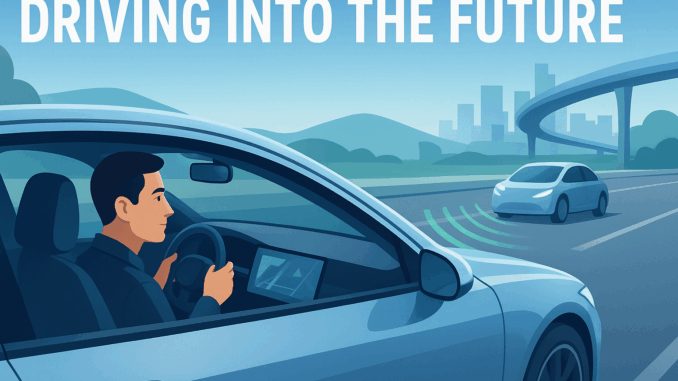
Driving Into the Future: Top Automotive Trends Redefining the Road in 2025
The automotive industry in 2025 is moving faster than ever before. What was once considered science fiction—self-driving cars, intelligent safety systems, electric power dominance, and connected vehicle ecosystems—has become part of our everyday reality. As technology evolves, the way we drive, maintain, and interact with our vehicles is changing. These new advancements are redefining not just transportation, but also lifestyle, business operations, infrastructure, and the global economy.
In this article, we explore the top automotive trends shaping the road in 2025, examining how they impact drivers, manufacturers, and the future of mobility.
1. The Rise of Electric Vehicles (EVs): Entering the Mainstream Era
Electric vehicles have been growing rapidly for the past decade, but 2025 marks a turning point where EVs become mainstream. Global governments continue pushing for greener solutions, and automakers are investing heavily in electric models across all categories—from compact cars to SUVs and even performance vehicles.
What’s driving this growth?
- Improved EV range: Many 2025 EV models now deliver ranges of 500 km to 700 km on a single charge.
- Faster charging technology: Ultra-fast chargers can power up to 80% battery in under 20 minutes.
- Lower battery costs: As production increases, battery prices continue to drop, making EVs more affordable.
- Government incentives: Tax reductions, free charging zones, and import duty relaxations boost EV sales.
Impact on consumers
Drivers benefit from lower running costs, reduced maintenance, and smoother driving experiences. EV infrastructure is expanding rapidly, with more charging stations found in malls, petrol stations, and residential areas.
Impact on the industry
Automakers are shifting production lines from fuel engines to electric powertrains. This transition is also creating jobs in battery technology, renewable energy integration, and software engineering.
2. Autonomous Driving Technology Reaches New Heights
Self-driving cars are no longer an experimental idea. In 2025, many new vehicles come equipped with advanced driver-assistance systems (ADAS) that bring us closer than ever to full automation.
Levels of automation making an impact in 2025:
- Level 2+: Widely available in mid-range cars, offering lane centering, adaptive cruise control, and hands-off driving in specific scenarios.
- Level 3: Premium vehicles allow conditional autonomy—drivers can relax in traffic jams as the car handles navigation.
- Level 4 (Pilot programs): Some cities are testing fully autonomous shuttles and taxis.
How AI is changing driving
Artificial intelligence plays a major role in enabling safer, smarter autonomous systems. These technologies can:
- Predict traffic flow
- Recognize pedestrians and obstacles
- Analyze road conditions in real-time
- Reduce human error—which accounts for over 90% of accidents
The future outlook
By the end of 2025, autonomous driving will continue expanding into personal and commercial sectors. Delivery robots, automated truck convoys, and robotic taxis will become more common, reducing operational costs and improving efficiency worldwide.
3. Connected Cars and the Internet of Vehicles (IoV)
Connectivity is the backbone of the next-generation automotive industry. Modern cars are no longer isolated machines; they are smart devices connected to a large digital ecosystem.
Key connected car features dominating 2025:
- Real-time navigation with traffic prediction
- Vehicle-to-vehicle (V2V) communication to prevent collisions
- Vehicle-to-infrastructure (V2I) communication for traffic lights, toll gates, and smart highways
- Smartphone integration and cloud services for entertainment and updates
- Over-the-air (OTA) updates that upgrade vehicle software without visiting a service center
Benefits for drivers
Connected cars offer a more personalized experience. Drivers can receive weather warnings, maintenance reminders, and safety alerts. Entertainment systems are more advanced, offering streaming, app integration, and smart assistant control.
Benefits for manufacturers
Companies can track vehicle performance, predict maintenance needs, and improve features through data-driven decision-making. This not only enhances customer satisfaction but also extends vehicle lifespan.
4. Advanced Safety Technologies Leading the Way
With global accidents still a major concern, automotive brands are focusing heavily on safety systems. The year 2025 brings innovations that protect drivers, passengers, pedestrians, and cyclists alike.
Popular safety features in 2025 include:
- 360-degree cameras and sensors for enhanced visibility
- Automatic emergency braking (AEB) with improved precision
- Blind-spot monitoring with advanced radar
- Driver attention detection using interior cameras
- Pedestrian and cyclist recognition using AI-powered analysis
- Night vision cameras for better visibility in low light
- Emergency lane keeping (ELK) to prevent unintentional lane departures
Why safety improvements matter
As vehicles become more automated, safety technology must advance equally. In 2025, these features reduce accidents, lower insurance costs, and improve overall road safety. Some countries even mandate ADAS features for new vehicles, pushing the industry to innovate further.
5. Sustainable Manufacturing: Cleaner, Greener Production
Sustainability isn’t just about what powers the car—it extends to how vehicles are built. Automakers worldwide are transforming their manufacturing processes to reduce environmental impact.
Eco-friendly trends in 2025 manufacturing
- Using recycled materials in interiors, including plastics, fabrics, and metals
- Switching to renewable energy sources in factories
- Reducing waste with AI-driven production systems
- Creating biodegradable components
- Lightweight construction using aluminum and carbon fiber to improve fuel efficiency
Why this matters
Consumers are becoming more environmentally conscious, and brands that prioritize sustainability earn greater trust. Governments also reward sustainable manufacturing with tax incentives and support for green technologies.
6. The Rise of Software-Defined Vehicles (SDVs)
The software-defined vehicle is one of the biggest shifts in the automotive world. Instead of relying primarily on mechanical upgrades, cars in 2025 are defined by their software capabilities.
What makes SDVs unique?
- Customizable driving experience through software settings
- Continuous improvements via OTA updates
- Digital dashboards replacing physical controls
- Enhanced infotainment systems with AI suggestions
- App-controlled vehicle functions (climate, security, charging)
Impact on consumers
Drivers benefit from improved performance, reduced maintenance visits, and access to new features months or even years after buying the vehicle.
Impact on automakers
Manufacturers are partnering with tech companies to create advanced operating systems, cybersecurity protections, and digital marketplaces for car software.
7. Modern Car Design: A Blend of Style, Aerodynamics, and Smart Functionality
Car design in 2025 is evolving to match new consumer expectations and technological capabilities.
Design characteristics of 2025 vehicles
- Sleeker shapes improving aerodynamics and EV efficiency
- Minimalist interiors inspired by luxury tech aesthetics
- Larger infotainment screens and digital cockpits
- Hidden door handles, slim LED lights, and clean edges
- Eco-friendly materials replacing traditional leather and plastic
Why design matters more than ever
With rising competition, brands use design to differentiate their vehicles and attract young, tech-savvy buyers who prefer modern, smart interiors.
8. The Growth of Mobility-as-a-Service (MaaS)
Traditional car ownership is evolving. In cities around the world, Mobility-as-a-Service (MaaS) solutions are gaining popularity.
Examples of MaaS in 2025 include:
- Ride-hailing apps
- Subscription-based car services
- E-scooter and e-bike fleets
- Autonomous shuttle services
- Car-sharing platforms
Benefits for urban transportation
MaaS reduces traffic congestion, lowers carbon emissions, and provides cost-effective mobility options for commuters. Many users prefer flexible access over full ownership, especially in crowded cities.
Conclusion: A Future Driven by Innovation
The automotive world in 2025 is vibrant, dynamic, and undergoing revolutionary transformation. Electric power, autonomous driving, smart connectivity, and software innovation are reshaping how we think about mobility. With sustainability and safety at the forefront, the future of driving is cleaner, smarter, and more efficient.
As technology continues to advance, the road ahead promises more exciting developments—bringing us closer to a world where transportation is seamless, intuitive, and deeply integrated with our digital lives.
Whether you’re a car enthusiast, a daily commuter, or a business owner, these automotive trends will redefine your experience on the road. The future of driving has already begun—and it’s steering us toward a smarter, more sustainable tomorrow.