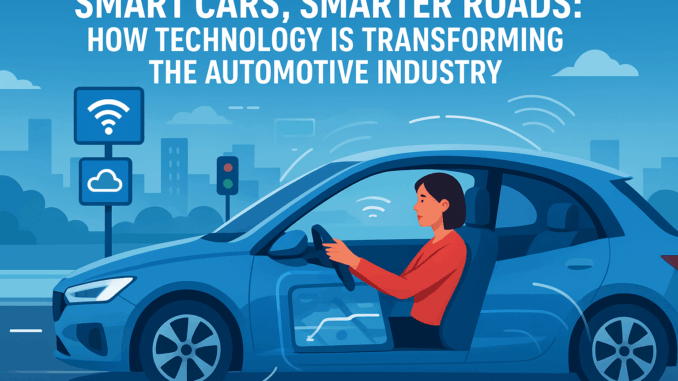
Smart Cars, Smarter Roads: How Technology Is Transforming the Automotive Industry
The automotive world is experiencing a revolutionary shift. What once seemed like a distant dream—cars that think, roads that communicate, and cities designed around intelligent mobility—is now becoming a daily reality. From smart vehicles equipped with advanced sensors to connected highways that guide traffic efficiently, technology is transforming every layer of the automotive industry.
In this article, we explore how smart cars and smart roads are reshaping mobility in 2025 and beyond, driving us toward a safer, cleaner, and more efficient transportation future.
1. The Evolution of Smart Cars: From Machines to Intelligent Partners
Smart cars represent the biggest transformation of the automotive sector. These vehicles are no longer mere mechanical devices—they are intelligent, software-driven machines capable of analyzing the environment, communicating with systems, and making real-time decisions.
What makes a car “smart”?
A truly smart car includes:
- Advanced Driver Assistance Systems (ADAS)
- Artificial Intelligence (AI) processing
- High-speed connectivity (5G or beyond)
- Real-time data analysis
- Cloud-based updates (OTA)
- Sensors, cameras, and radar systems
These elements work together to create a seamless driving experience, improving safety, comfort, and performance.
AI: The Brain of Modern Vehicles
AI enables smart cars to:
- Identify obstacles and potential hazards
- Predict driver behavior
- Analyze road conditions
- Optimize fuel or battery efficiency
- Improve navigation and route planning
By 2025, AI has become the core of vehicle systems, making driving safer and more interactive than ever before.
2. Autonomous Driving: The Road Toward Zero-Accident Transportation
Autonomous vehicles are no longer futuristic fantasies—they are gradually becoming integrated into mainstream automotive manufacturing.
Advancements in Autonomous Technology
In 2025, autonomous driving systems include:
- Level 2+: Hands-off cruising, lane centering, and intelligent speed adaptation
- Level 3: Conditional autonomy during traffic jams or on highways
- Level 4: Driverless vehicle pilots in selected smart cities
These systems rely on cameras, LiDAR sensors, radar, and AI-driven decision-making to operate effectively.
Why autonomous driving matters
Over 90% of road accidents are caused by human error. Autonomous technology aims to:
- Reduce collisions
- Save lives
- Improve traffic flow
- Lower fuel consumption
- Allow safer mobility for elderly and disabled passengers
Self-driving taxis, delivery robots, and automated trucks are already being tested in several regions, marking the beginning of a transportation revolution.
3. The Rise of Connected Cars and the Internet of Vehicles (IoV)
One of the most important developments in modern mobility is connectivity. Smart cars now operate within a larger network, communicating with other vehicles, road systems, and infrastructure.
Components of the Internet of Vehicles
- Vehicle-to-Vehicle (V2V) communication
- Vehicle-to-Infrastructure (V2I) communication
- Vehicle-to-Pedestrian (V2P) alerts
- Cloud-based monitoring and analytics
Connectivity allows cars to share information such as location, speed, road hazards, and weather conditions.
Benefits of Connected Mobility
Connected cars improve:
- Safety: Cars warn each other about upcoming dangers.
- Efficiency: Traffic flows more smoothly with real-time coordination.
- Navigation: Drivers receive accurate maps and alerts.
- Maintenance: Vehicles diagnose issues early with predictive alerts.
By 2025, most new vehicles come with built-in connectivity that enhances convenience and performance.
4. Smart Roads: Infrastructure Designed for the Future
Smart cars alone cannot transform mobility—smart roads play an equally important role. Cities around the world are upgrading their infrastructure to support intelligent transportation systems (ITS).
Features of Smart Roads
- Embedded sensors for traffic monitoring
- Intelligent traffic lights that adjust based on congestion
- Digital signboards with real-time updates
- Solar-powered road surfaces
- EV charging lanes
- Smart intersections preventing accidents
- Roadside units (RSUs) enabling V2I communication
These systems continuously monitor traffic flow, weather conditions, and road safety, enabling efficient transportation.
Why smart roads matter
Smart roads:
- Reduce travel time
- Decrease congestion
- Improve emergency response
- Support autonomous vehicle navigation
- Lower accident rates
Together with smart cars, they create safer and cleaner mobility ecosystems.
5. Electric Vehicles (EVs): Powering the Green Mobility Revolution
The shift from gasoline to electric power is accelerating rapidly. In 2025, EVs represent a major share of new car sales.
Why EVs are dominating
- Reduced carbon emissions
- Lower fuel and maintenance costs
- Government incentives and tax benefits
- Improved battery technology
- Fast-charging infrastructure expansion
Battery ranges in 2025 are significantly higher, often exceeding 500 km per charge, making electric vehicles practical for long distances.
Smart tech enhances EVs
Smart features like regenerative braking optimization, battery health monitoring, and AI-powered energy management allow EVs to perform better while consuming less power.
6. Software-Defined Vehicles: Cars That Evolve Over Time
Modern vehicles are becoming software-driven devices similar to smartphones.
What is a software-defined vehicle (SDV)?
An SDV allows:
- Over-the-air (OTA) updates
- New features added after purchase
- Continuous performance optimization
- Digital dashboards and customizable settings
Instead of paying for hardware upgrades, drivers can download improved systems through wireless updates.
Examples of SDV features
- Enhanced autopilot modes
- Advanced entertainment systems
- New safety alerts
- Improved battery management
- Personal AI assistant integration
Software-defined vehicles represent the future of car ownership—flexible, upgradeable, and highly intelligent.
7. Smart Sensors and Safety Innovations: Reducing Risks on the Road
Smart cars and smart roads rely on an array of sensors and systems to keep drivers safe.
Safety features transforming mobility in 2025
- 360° cameras and radar systems
- Collision avoidance technology
- Pedestrian and cyclist detection
- Adaptive headlights
- Blind-spot monitoring
- Driver fatigue detection
- Lane-keeping assist
- Smart braking systems
These features, powered by AI, help prevent accidents before they occur.
How smart safety benefits the driver
- Reduced human error
- Better visibility in tough conditions
- Faster response to road hazards
- Lower insurance costs
- Increased confidence while driving
Safety remains one of the most impactful aspects of automotive innovation.
8. Mobility-as-a-Service (MaaS): A New Way to Travel
The era of personal car ownership is shifting toward flexible mobility solutions.
Examples of MaaS platforms
- Ride-hailing apps
- Subscription-based vehicle access
- Car-sharing services
- Micro-mobility (e-bikes, scooters)
- Autonomous shuttle networks
MaaS allows users to enjoy transportation without the cost or responsibility of owning a car.
Why MaaS is gaining popularity
- Cost-effective travel
- Reduced urban congestion
- Eco-friendly mobility
- Convenience and accessibility
Smart roads and connected systems make these services more efficient.
9. The Integration of Big Data and Predictive Analytics
Data has become the fuel that powers modern mobility. Smart cars generate vast amounts of information every second.
How data transforms the automotive industry
- Predictive maintenance prevents breakdowns
- Traffic analysis improves city planning
- AI route optimization saves fuel and time
- User behavior insights enhance vehicle design
- Fleet management systems boost logistics efficiency
Big data allows manufacturers and cities to make smarter decisions.
10. The Future of Mobility: What’s Next?
Looking ahead, we can expect even more exciting advancements:
- Fully autonomous transport networks
- Wireless charging roads
- Ultra-efficient EV batteries
- AI-powered road safety systems
- Smarter urban planning based on real-time mobility data
The combination of smart cars and smart roads will reshape global mobility, making travel safer, faster, cleaner, and more intelligent.
Conclusion: A Smarter, Safer, Connected Automotive Future
The automotive industry is transforming at a pace never seen before. Smart cars equipped with AI, connected systems, and advanced safety features are redefining the driving experience. Meanwhile, smart roads enable smoother traffic flow, reduce accidents, and support autonomous vehicles.
Together, these innovations form the backbone of the future transportation ecosystem. As technology continues to evolve, the road ahead becomes brighter—leading us to a future where mobility is intelligent, sustainable, and seamlessly interconnected.